The strongest acquisition begins with the image, but it should also be informed by edition, scale, production and placement.
1. Begin with the work
Live with the image mentally before focusing on specifications. A photograph should continue to reveal itself: composition at a distance, material detail up close, and an emotional register that survives repeated viewing.
2. Understand the edition
Ask for the total edition size, artist’s proofs, available numbers and whether the image is issued in more than one dimension. The invoice and certificate should identify the exact image, size, medium and edition number.
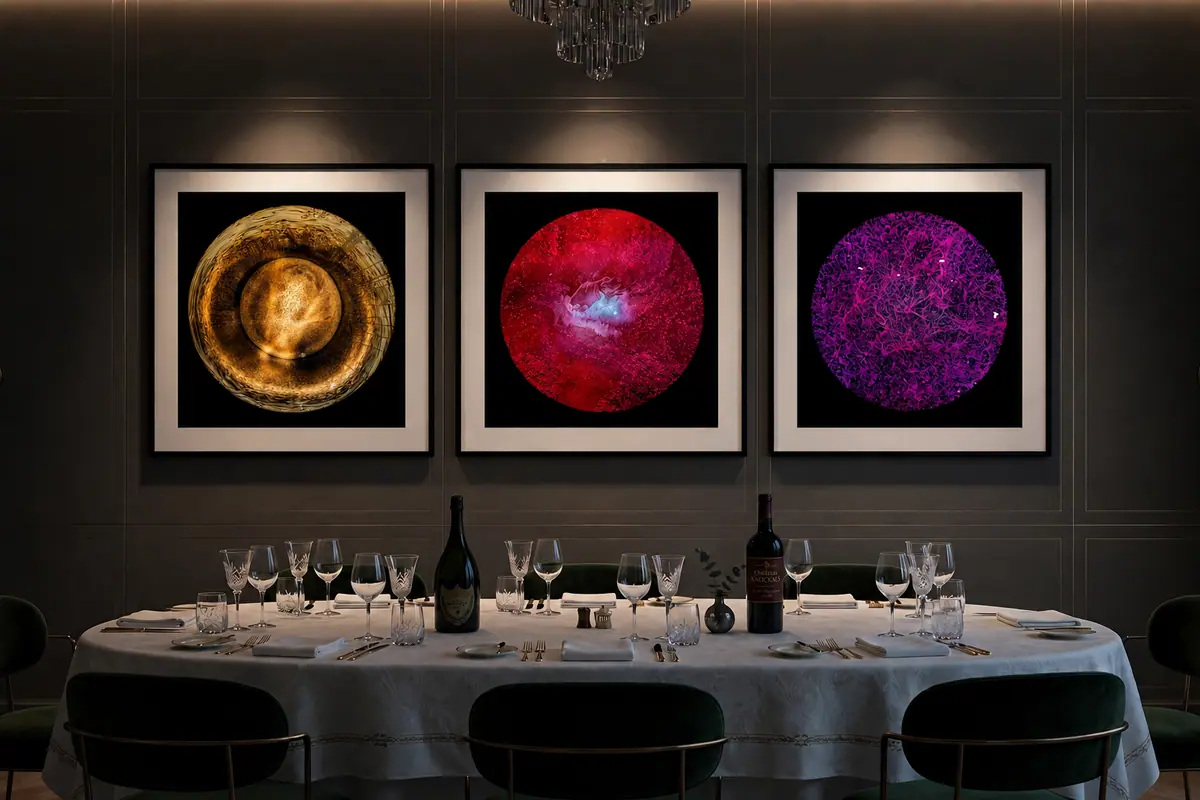
3. Choose scale with the room
Large-format photography can be architectural. Consider viewing distance, furniture width, ceiling height and natural light. A gallery can prepare a room visualisation and recommend whether a single monumental work or a group will give the strongest result.
4. Insist on museum-grade production
Paper, pigment, mounting, glazing and framing all affect longevity and presence. Ask for archival materials, conservation-minded mounting and glazing appropriate to the location.
5. Plan delivery and installation
Major works require professional packing, insured transport and experienced installers. Studio 54 Fine Art coordinates international white-glove delivery and can advise on framing close to the final destination.
For Patrick Desgraupes availability, edition information, pricing and tailored placement advice, contact the gallery’s private collector desk.